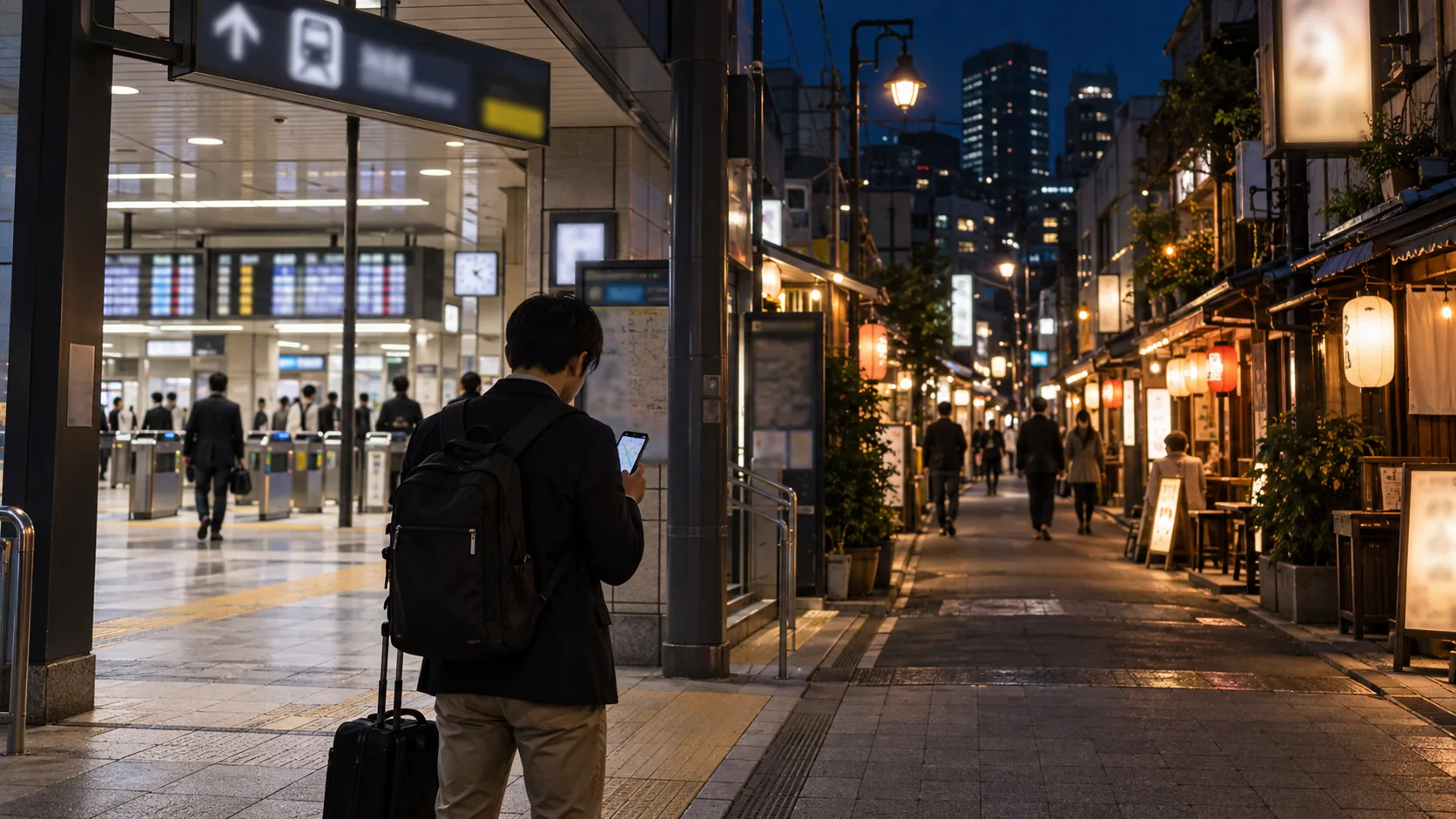
The common first-night mistake is treating Tokyo like a list of famous stops. A better approach is to treat it like several cities sharing a rail map. Choose one area, understand its rhythm, and leave space for a discovery you could not have scheduled.
1. Choose a radius, not a wish list
Start with the kind of evening you want: high-energy streets, a food-led wander, a quiet conversation, live music, or a polished special occasion. Then choose one neighborhood that supports that mood. Keeping the evening compact protects your time and makes spontaneous changes easier.
If two stops look close only because they share the word “Tokyo,” check the actual route before placing them in the same evening.
2. Pick one anchor experience
An anchor is the one part of the evening that would be difficult to replace: a reservation, ticketed performance, carefully chosen bar, or dinner with a firm arrival window. Book that. Keep everything around it flexible.
This structure avoids two bad outcomes: spending the whole night watching the clock, or missing the one experience you cared about because the earlier plan expanded.
3. Set a pace you can sustain
A first night often follows a long flight or a full day of sightseeing. Plan an opening that works even if your energy is low. A compact meal-and-walk route can grow into a longer night; an overbooked itinerary cannot easily shrink without friction.
- Early: arrive, orient, and eat without rushing.
- Middle: spend time on the anchor experience.
- Late: add one optional stop only if energy and logistics support it.
4. Protect the return before you go out
Save your accommodation name and address, check the route back, and know what you will do if normal transit no longer fits your timing. Battery, connectivity, weather, and the needs of everyone in your group are part of the plan—not afterthoughts.
Transport schedules and venue hours change. Use current official transport information and direct venue channels on the day of your visit.