Build a Japan nightlife budget around three separate amounts: the confirmed cost of your main plan, the journey back, and a reserve you do not spend on extra stops. Check charges and accepted payment before entering a venue. This guide helps independent travelers make a spending decision; it does not claim that one national price fits every bar, restaurant or city.
Price the evening you actually intend to have
Begin with one anchor: dinner, a performance or another specific activity. Read its current booking page or ask the venue what your chosen visit includes. Record the amount per person, what is included, and what remains payable. A headline ticket price is useful only when you understand the conditions attached to it.
Use the following questions as a check, not as a claim that every venue applies these charges: Is there an entry or seating charge? Is a minimum order required? Are service charges and taxes included in the displayed total? Does the booking have a time limit, cancellation charge or separate payment due on arrival?
Ask before committing if the answer changes whether you can afford the evening. A helpful sentence is: “What is the total charge per person for this plan, including required extras?” If the explanation remains unclear, choose a simpler venue or a different activity. Our etiquette primer covers asking and paying without turning the interaction into a confrontation.
Make a Japan nightlife budget worksheet
Write down amounts in yen using today’s actual quotes. Keep the return journey separate from money available for another round or spontaneous stop. For shared costs, agree whether the amount is per person or for the group before adding it to anyone’s budget.
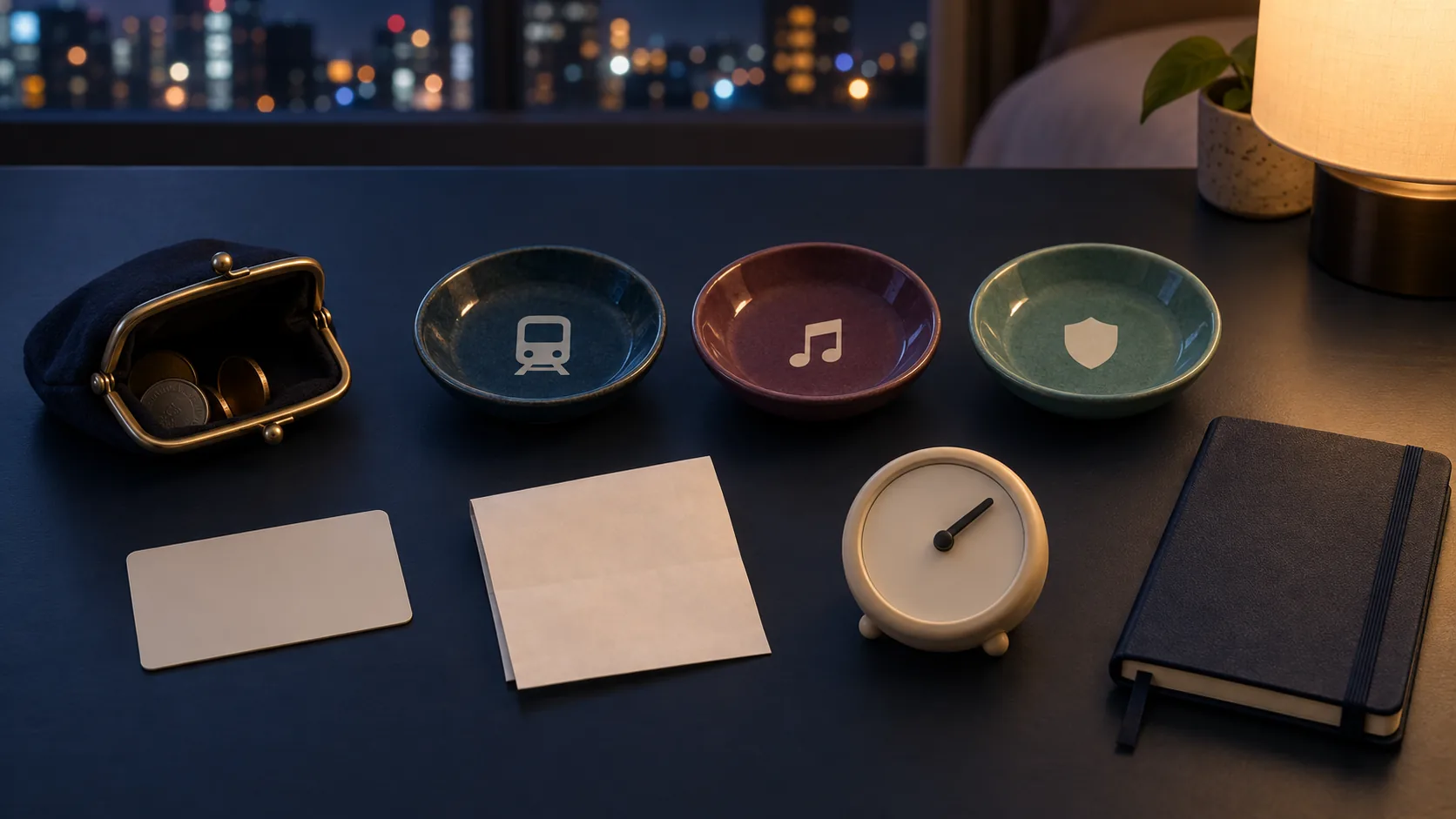
- A — Anchor: confirmed activity or meal, including required extras: ¥____.
- B — Other planned spending: additional food, drinks or tickets: ¥____.
- C — Transport: outward journey plus your planned return: ¥____.
- D — Protected reserve: an amount chosen for a realistic change of plan: ¥____.
- Total evening ceiling: A + B + C + D = ¥____.
- Still available for optional stops: the ceiling minus paid costs, unpaid commitments, return transport and reserve.
The reserve is a personal planning choice, not a recommended national percentage. Base it on your actual fallback. If a missed train would mean a taxi you cannot afford, move the leave-by time earlier or stay nearer the accommodation instead of pretending the reserve solves the problem.
Record prepaid items as already paid, while keeping their conditions visible. This prevents counting a prepaid ticket twice or forgetting that dinner is still due. In a group, put the shared calculation in one place so people can choose whether to join an extra stop without pressure.
Prepare payment options before going out
The Japan National Tourism Organization’s cashless-payment guide explains that acceptance and mobile compatibility vary and recommends cash as a fallback. Check what your chosen venue accepts. A card that worked in a department store is not proof that your next stop accepts it or the same phone wallet.
Carry a payment combination that suits the confirmed plan: an accepted card, a usable cash backup, and sufficient transport balance where relevant. Keep the fallback accessible if the phone battery fails. Do not store the only copy of your accommodation address behind an app login you cannot recover offline.
Separate currency-conversion estimates from the yen amount actually due. Check your own provider’s exchange rate and fees rather than using a guide’s illustrative conversion. This worksheet is for organizing travel spending, not recommending a card, bank or financial product.
Protect the trip home
Late changes often affect both time and money. Before adding a venue, check whether you can still take the planned return route. The Osaka night transport guide shows how to work backwards through connections; use the same method with the relevant operator in other cities.
The Japan National Tourism Organization’s taxi guidance notes that late-night surcharges and highway tolls can affect fares. Obtain information for your actual route and travel time. Do not treat a short daytime example as a quote for a long nighttime journey.
If the fallback is expensive, decide on a firmer leave-by time before the evening starts. Consider a quieter stop near the accommodation instead of another cross-city journey. Ending with money and energy left is a reasonable outcome, not a failed night.
Japan nightlife budget questions
How much money do I need for a night out in Japan?
Use the current cost of your chosen activity, required extras, transport and a realistic fallback. There is no single useful allowance for every city and venue. The worksheet above gives you a total based on an actual plan and makes clear which money is available for optional spending.
Should I rely on cash or a card?
Check the venue and transport services you will use, then prepare a backup. Official visitor guidance notes that cashless acceptance and compatibility vary. Avoid depending on one phone-based method for the whole evening. Keep enough accessible payment for your confirmed commitments and the journey back.
How can I avoid overspending without calculating all night?
Set the ceiling before going out, protect the return reserve, and review the remaining optional amount before changing venues. Choose one main experience rather than several unpriced possibilities. If you want a framework for the evening itself, start with our first-night planning guide and adapt it to your destination.
Practical planning guidance based on the official sources linked above, checked September 16, 2026. Verify current transport, access, payment and venue conditions directly before your visit.