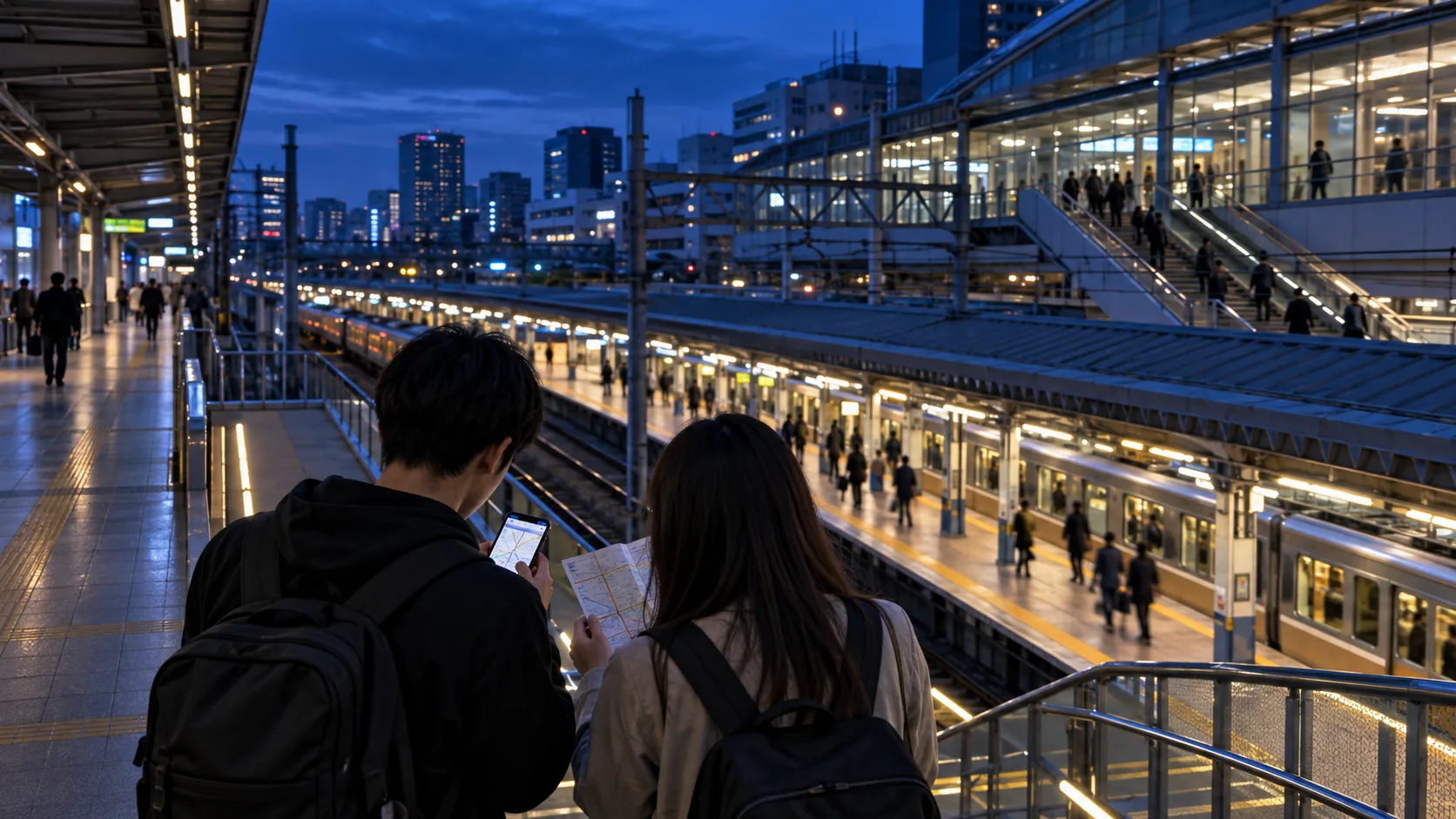
For a first evening in Osaka, plan the journey back before choosing the final stop. Check the exact station, operator, direction and date for every leg, then choose a departure that leaves room for a missed connection. Keep a separate taxi fallback and the accommodation address saved offline. There is no single last-train time that works for every Osaka itinerary.
Start with the station beside your accommodation
Write down your accommodation’s full name and address, then identify the station and exit you intend to use. A familiar district name is not enough for a late return. A route to a major interchange can still leave an unfamiliar walk, another train or a closed entrance between you and your room.
The official Osaka Metro station guide separates routes by line and lists transfers. For example, Umeda is M16 on the Midosuji Line; the connected area also includes Higashi-Umeda on the Tanimachi Line and Nishi-Umeda on the Yotsubashi Line. Save the exact station and line your route uses rather than a pin labelled only “Umeda.”
Apply the same care around Namba. Check which operator your ticket or route names, where you need to enter, and whether the final service reaches your destination. A nearby station entrance does not guarantee access to the platform you need.
Check the last usable connection, not just the last departure
Open the operator’s current journey planner or timetable and use the actual travel date. Work backwards from the accommodation. For a route with a transfer, check the second leg first, then confirm that the first train gives you enough time to reach its platform. Repeat for every change of operator.
Osaka Metro provides first- and last-train information; its station guide also links to route, fare and timetable searches. Treat published timetable pages as a starting point and check service notices on the day. This guide deliberately gives no citywide midnight cutoff.
- Record the final station, direction and required transfer.
- Find a complete return journey for your date.
- Choose an earlier workable journey as your normal plan.
- Set a leave-the-venue reminder that includes paying, collecting belongings and walking to the platform.
- Save the route offline, including the operator names.
A timetable departure is the time the train leaves, not a suggested time to leave your table. Choose your buffer for the group’s walking pace, station familiarity and accessibility needs. An unfamiliar interchange deserves more room than a direct journey you have already made.
Make the backup practical before you need it
If missing the train would make the evening unaffordable, shorten the evening or choose a closer area. Do not fund a speculative second venue with the money you need to get back. Our nightlife budget worksheet separates the return reserve from optional spending.
For a taxi fallback, save the destination in Japanese when available and identify a legitimate rank or established booking option. The Japan National Tourism Organization’s taxi guide explains metered fares, late-night surcharges and the usefulness of a written Japanese address. Confirm the likely cost and payment method for your actual journey; a daytime estimate for another city is not your fare.
A booking app is useful only if you can use it when needed. Check setup, payment and connectivity before the evening, and keep the address accessible if the phone loses signal. A taxi is a fallback option, not a promise of immediate availability.
Copy this return-route card
- Accommodation: full name and Japanese address.
- Normal route: operator, boarding station, direction, transfer and destination.
- Leave-by reminder: a time chosen from today’s complete journey, allowing for the walk.
- Backup: rank or booking method, estimated cost and accepted payment.
- Group agreement: meeting point and what happens if people leave separately.
Recheck the card if dinner moves to another neighborhood. A new final stop changes the return journey even when the venue looks close on a city map. Keep the evening compact using the planning method in our first-night framework, then substitute Osaka’s actual routes.
Osaka night transport questions
What time is Osaka’s last train?
There is no useful single answer for a complete journey. The relevant departure depends on your line, direction, date, destination and transfers. Check the operator’s current timetable for each leg and choose a complete connection, rather than relying on a general statement about trains stopping around midnight.
Can I stay out later and take a taxi?
You can plan a taxi return, but first check availability, cost and payment for your route. Keep that money separate from venue spending. If the estimate is beyond your budget, a shorter evening near your accommodation is a better plan than hoping an uncertain late connection will work.
What should I do before leaving the hotel?
Save the address, check the complete return route and service notices, agree on a leave-by reminder, and keep a charged phone and payment backup. Once those details are settled, choose the evening’s main activity. The aim is to enjoy Osaka without making the final journey a last-minute decision.
Practical planning guidance based on the official sources linked above, checked September 16, 2026. Verify current transport, access, payment and venue conditions directly before your visit.