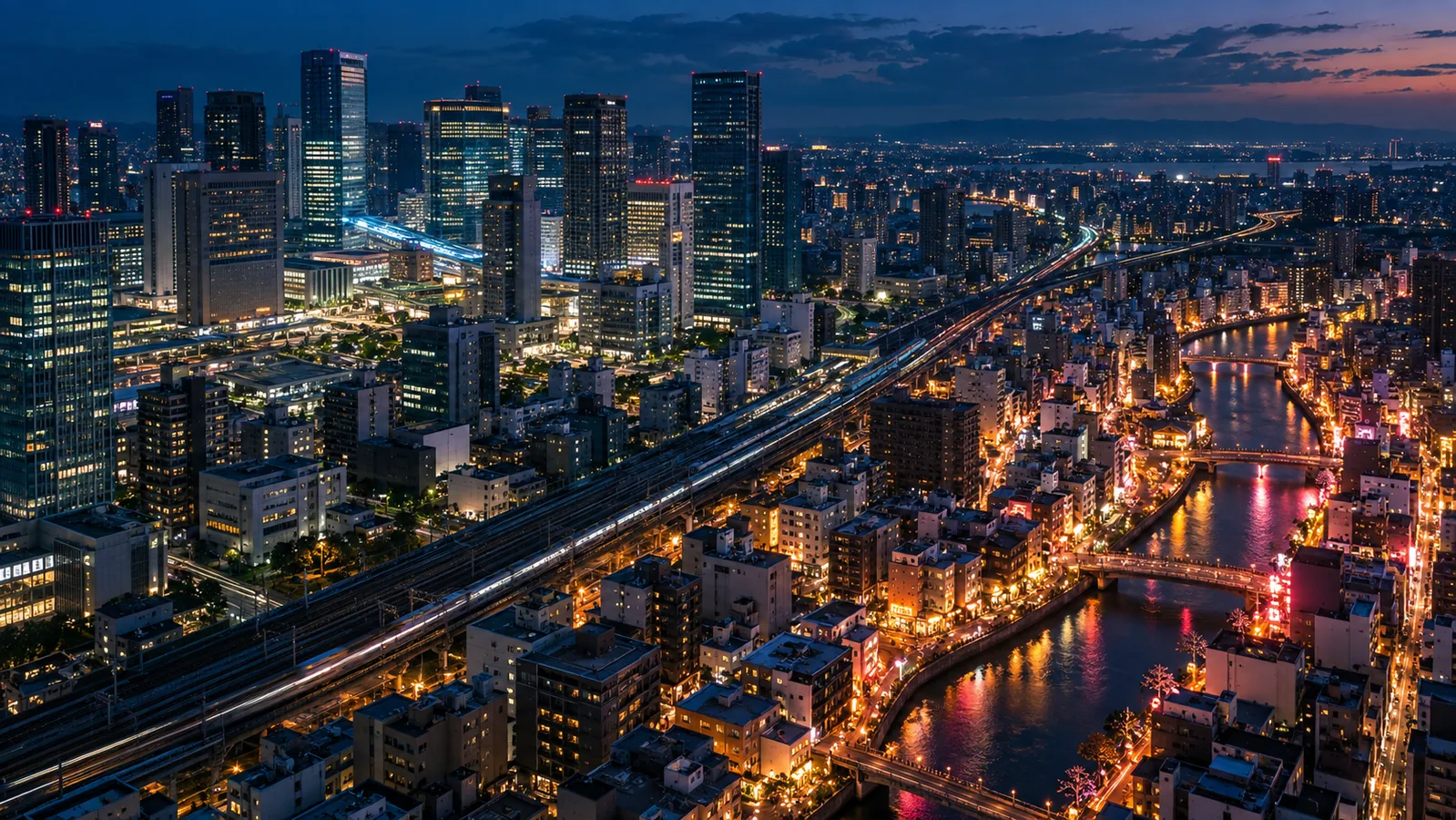
Choose Namba and Minami when the evening is centered on Dotonbori, food, or exploring the lanes around Ura-Namba. Choose Umeda and Kita when convenience around Osaka Station, a specific reservation, or an easier return to a nearby hotel matters more than being close to Dotonbori.
Match the district to the night you actually want
Osaka’s official tourism material commonly frames the city center as two major areas: Kita in the north and Minami in the south. That is a useful planning boundary, not a challenge to cover both. For one night, a compact radius is usually more useful than a longer checklist.
Direct recommendation: first-time visitors whose must-do is Dotonbori should base the evening in Namba. Visitors staying near Osaka/Umeda Station should not cross the city merely because a generic nightlife list says they must; plan a complete Kita evening unless a specific Minami experience matters enough to justify the transfer.
Choose Namba for a food-first Minami evening
The Osaka Convention & Tourism Bureau describes Dotonbori in the Minami/Namba area as a famous restaurant and bar district. Nearby Ura-Namba sits east of Namba Station and is known for a dense mix of standing bars and restaurants. Together, those areas make Namba a practical base when dinner, casual stops, and the visual energy of Minami are the point of the night.
Namba also has several rail connections, but “Namba” is not one interchangeable platform. The official Osaka Metro guide lists Namba as M20 on the Midosuji Line, with Yotsubashi and Sennichimae line connections as well as JR, Hanshin, Kintetsu, and Nankai services. Save the operator, line, station entrance, and final destination rather than relying on the district name alone.
A simple Namba plan
- Set one anchor: dinner, a booked experience, or one venue you have verified.
- Keep the optional second stop within the same walking radius.
- Check the complete return journey before ordering another round or extending the night.
If your evening could run late, use our Osaka night transport guide to check every leg and create a realistic fallback.
Choose Umeda for a Kita base and simpler hotel logistics
Umeda is the practical choice when your accommodation, reservation, or onward journey is near the Osaka Station area. The official Osaka Metro guide lists Umeda as M16 on the Midosuji Line and shows connections around the station area to Higashi-Umeda, Nishi-Umeda, JR, Hankyu, and Hanshin services. That connectivity is useful, but it also means the station complex deserves precision: save the exact line and station name your route uses.
A Umeda night does not need to imitate Dotonbori. Build it around one confirmed dinner or experience, then add a nearby optional stop. This is a planning recommendation rather than a claim that every block has the same character. Venue hours, admission, dress rules, and reservation policies change, so verify them directly.
A simple Umeda plan
- Use the station or your hotel as the fixed return point.
- Choose one venue whose current rules and location you can confirm.
- Keep the rest flexible and nearby instead of transferring south late in the evening.
Namba or Umeda: a five-question decision
- Where is your hotel? If it is within a simple walk of one district, that advantage is hard to beat late at night.
- What is the one non-negotiable experience? Dotonbori and Ura-Namba point south; a reservation near Osaka Station points north.
- Which exact station and operator take you home? “Namba” and “Umeda” each describe larger connected areas, not a single universal platform.
- How much transfer friction will your group tolerate? A cross-city move uses time and creates another navigation decision.
- What happens if the optional stop fails? Have a nearby alternative or end the night; do not follow an unverified street approach because the first plan changed.
If cost is the deciding factor, build your ceiling with the Japan nightlife budget worksheet and keep return money separate from optional spending.
Build one neighborhood route, not two partial nights
The Midosuji Line connects Umeda and Namba, so moving between them can look simple on a map. A complete evening still includes walking to the correct entrance, waiting, transferring if needed, and navigating from the arrival station. Use the official operator journey tools for your date and direction rather than treating one line connection as a promise about the whole return.
- Base: Namba/Minami or Umeda/Kita
- Anchor: one verified reservation or must-do
- Optional stop: close enough to skip without regret
- Exit: exact station, operator, direction, and leave-by reminder
- Fallback: saved accommodation address and protected return budget
Before leaving your accommodation, screenshot the route and save the address in Japanese when available. Check current timetables and service notices on the day itself; this guide deliberately avoids publishing a single “last train” time because it would not apply to every route.
Keep venue choice deliberate
Do not let a nightlife tout make the venue decision for you. Osaka Prefectural Police documents cases in which people who followed a tout were presented with an inflated bill and threatened, and it advises people not to follow such touts. Decline the approach, keep moving, and choose the venue independently. Before ordering, confirm charges, entry rules, and payment directly with the venue.
For warning signs and official-help steps, read our focused guide to avoiding touts and rip-off bars. Our nightlife etiquette guide covers photography, conversation, payment, and leaving well. Follow venue rules and local law. If a dispute becomes threatening, the same Osaka Prefectural Police guidance advises calling 110 or consulting a police box.
Questions travelers ask
Is Namba or Umeda better for first-time visitors?
Namba is the clearer choice when Dotonbori is your priority. Umeda is better when you are staying near Osaka Station or already have a Kita reservation. There is no universal winner independent of your anchor and return route.
Can I visit both in one night?
Yes, but only if one specific experience justifies the move and your complete return plan still works. Otherwise, staying within one district reduces navigation and leaves more time for the evening itself.
Is Ura-Namba the same as Dotonbori?
No. Official tourism material places Ura-Namba east of Namba Station, while Dotonbori is its own well-known Minami destination. Treat them as nearby but distinct parts of a south-side plan.
Sources and editorial note
This guide was written by the Japan Night Atlas Editorial Desk and checked on September 21, 2026. It separates verified location and transit facts from our planning recommendations. Hours, prices, service patterns, and venue policies can change; verify them with the operator or venue before going.