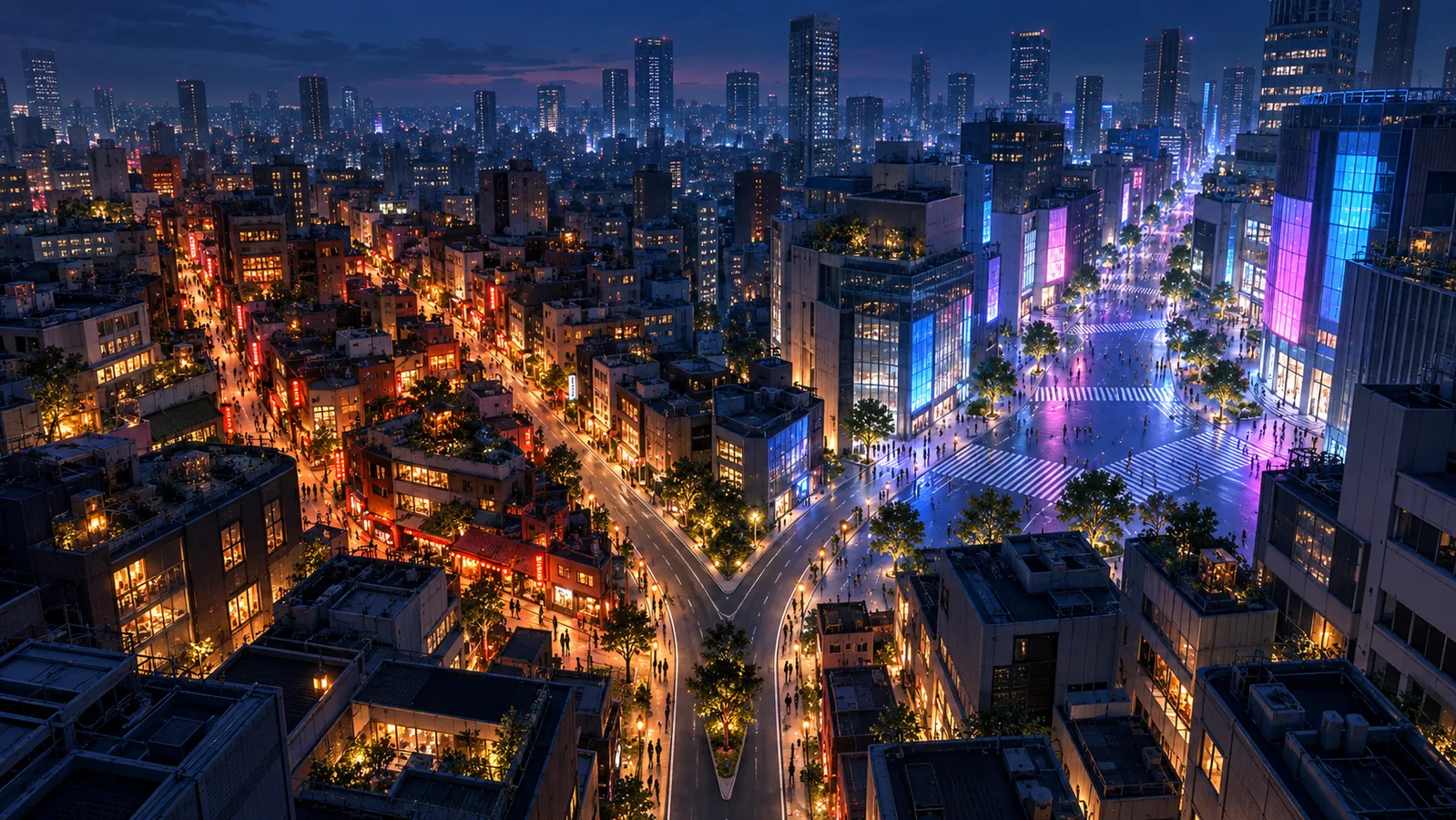
For a first Tokyo night, pick Shinjuku for range: dinner, small-bar atmosphere, entertainment streets, and quieter corners can all sit within one broad hub, but the station and its exits demand preparation. Pick Shibuya for a contemporary, high-energy night where the streetscape, shopping, music, and people-watching are part of the experience. If one district gives you a simpler ride or walk back, let that decide.
Tokyo nightlife neighborhoods: Shinjuku vs Shibuya at a glance
| Decision | Shinjuku | Shibuya |
|---|---|---|
| Best fit | Travelers who want several moods within one large district | Travelers who want contemporary street energy and a social, trend-led setting |
| Planning challenge | A large station, many exits, and sharply different subareas | A busy station zone and crowded main routes that reward a precise meeting point |
| Good anchor | A verified dinner, performance, or bar in one named subarea | A verified meal, music venue, viewpoint, or bar close to the route home |
| Main risk | Drifting into an unfamiliar entertainment street or following a tout | Letting crowds, spontaneous venue changes, or a vague meeting point break the plan |
| Simple rule | Save the exact exit and stay within one side of the station | Choose one landmark-sized meeting point and one onward street cluster |
This comparison is an editorial planning tool, not a claim that every venue or block has the same character. Tokyo changes street by street, and individual venue policies change faster than neighborhood labels.
Choose Shinjuku for variety—but name the subarea first
Shinjuku is not one nightlife experience. Its strength is range, and that is also its planning problem. A useful plan begins with an exact station exit and one named subarea rather than the instruction “meet in Shinjuku.” The official GO TOKYO area guide presents Shinjuku as a major destination with contrasting entertainment, commercial, and quieter sides; treat those contrasts as separate choices.
A practical Shinjuku plan
- Choose the side of the station. Save the exit number or gate name shown by your current route app and operator information.
- Verify one anchor. Confirm the venue’s own hours, reservation rule, cover or service charge, age rule, and payment options on the day.
- Keep the second stop optional. Use a nearby place you selected yourself. Do not let a street approach rewrite the route.
- Set the leave decision. Decide when you will check the live route home, not just when you hope to leave.
Shinjuku suits groups with mixed tastes because one person can prioritize dinner while another wants a bar or performance afterward. It is less forgiving when the group has no meeting point, no saved address, and no agreement about the trip home.
Choose Shibuya for a contemporary, street-led night
GO TOKYO describes Shibuya as a center of modern Japanese culture, and that framing is useful: the district works when fashion, music, illuminated streets, and people-watching are part of the night rather than scenery between venues. Choose it when you want a visible, energetic start and are comfortable with crowds.
A practical Shibuya plan
- Use a precise meeting point. A station name alone is not enough. Share a pin and the side of the station before anyone arrives.
- Move from public space to one verified anchor. Do not build the night around a string of unverified door decisions.
- Expect crowd friction. Give the group time to regroup and avoid blocking crossings, station gates, or storefronts.
- Keep the return visible. Save the correct line, direction, transfer, and accommodation address before entering a loud venue.
Shibuya is the stronger choice when the atmosphere itself is the attraction. It is a weaker choice when someone in the group dislikes dense crowds or needs a low-stimulation route with minimal navigation.
Build the Tokyo night around the route home
There is no responsible universal “last train” time for either district. The answer changes with your date, operator, destination, direction, transfers, and service conditions. Use current operator information on the day and work backward from the last connection you are willing to take.
- Accommodation name and address in Japanese and English.
- The exact station, line, direction, and any transfer.
- A screenshot for orientation only, plus a reminder to recheck live service.
- A realistic taxi or stay-nearby fallback you can afford.
- A group rule: nobody disappears without messaging the others.
GO TOKYO’s transportation guide identifies rail, subway, bus, taxi, walking, and other options across the city, but availability and suitability vary. A transport mode is not a plan until you have checked the actual route and cost for your destination.
For a broader framework, use our first-night Tokyo planning guide. It explains how to combine one neighborhood, one anchor, and one return route without overloading the evening.
Use the same nightlife safety rule in both districts
Choose the venue yourself; do not follow a street hawker, scout, or stranger who promises a special deal. The Tokyo Metropolitan Police Department specifically warns visitors about street hawkers and rip-off patterns in entertainment districts. A persuasive invitation is not independent evidence that a venue is safe, licensed, fairly priced, or suitable for your group.
- Check the venue’s official site or an official booking channel before entering.
- Ask about cover, table, service, set, and minimum-order charges before ordering; do not assume every venue uses the same system.
- Keep your card in sight where possible and review the amount before approving payment.
- Leave when a situation becomes pressuring. Do not escalate an argument over a doorway or in the street.
- For immediate danger, contact police. For non-urgent help, ask staff at your accommodation or a nearby koban (police box).
Read the full Japan nightlife safety guide to avoiding touts and rip-off bars before going out. Respect venue age and ID rules, photography restrictions, private property, residents, and staff instructions. Our nightlife etiquette primer covers entry, ordering, photos, payment, and leaving well.
Budget without inventing a “typical” Tokyo night
A trustworthy budget starts with current quotes, not a citywide average. Check the anchor venue’s posted menu and fees, estimate the confirmed route home, and keep a separate reserve. Prices, cover charges, and payment methods vary by venue and can change.
- Record the quoted cost of the one must-do experience.
- Add food and drink using current menu information where available.
- Price the planned return route and a fallback separately.
- Keep an untouched reserve for transport or an unexpected change.
Use the Japan nightlife budget worksheet to build the numbers from evidence instead of relying on a single headline figure.
A compact one-night plan for either neighborhood
If you choose Shinjuku
- Start: arrive at the saved gate or exit and regroup.
- Anchor: use one verified dinner, performance, or bar in the chosen subarea.
- Optional: add one nearby stop selected before or during the evening from reliable information—not from a tout.
- Exit: recheck the live route at the leave reminder and use the saved gate or pickup point.
If you choose Shibuya
- Start: meet at a shared pin away from the flow of gates and crossings.
- Anchor: choose one verified experience that matches the contemporary, social mood you came for.
- Optional: walk one compact street cluster rather than chasing a list across the district.
- Exit: regroup, confirm everyone’s route, and leave enough margin for the actual connection.
Bottom line: the best Tokyo nightlife neighborhood is the one whose atmosphere fits your group and whose trip home you can explain before the first order. Choose Shinjuku for range, Shibuya for contemporary street energy, and proximity when logistics break the tie.
Traveler questions
Is Shinjuku or Shibuya better for a first night in Tokyo?
Shinjuku is better when you want more variety around one hub and can plan the correct exit. Shibuya is better when modern street energy, music, fashion, and people-watching are central to the night. If one is much closer to your accommodation, choose the easier return.
Can I visit both Shinjuku and Shibuya in one night?
You can, but most first-time visitors get a better night by treating one as the main district. Moving between them adds navigation, waiting, and another chance to miss a connection. Combine them only when the second stop is genuinely essential and the return route is confirmed.
Is Kabukicho safe for tourists?
No entertainment district is captured by a yes-or-no label. Use a venue you selected independently, ignore street solicitation, confirm charges, keep the group together, and leave pressure situations. The Tokyo police warning against street hawkers applies directly to this decision.
What time is the last train from Shinjuku or Shibuya?
There is no single reliable time. It depends on operator, line, direction, destination, transfers, date, and service conditions. Check the official operator’s current journey information for your exact route on the day.
Sources and editorial notes
Official pages were checked on September 24, 2026. Neighborhood recommendations and the comparison table are Japan Night Atlas editorial synthesis; they are not venue endorsements.
- GO TOKYO — A guide to Shinjuku (area context; accessed September 24, 2026).
- GO TOKYO — Shibuya: the epicenter of modern Japanese culture (updated March 11, 2026; accessed September 24, 2026).
- GO TOKYO — Transportation in Tokyo (transport modes and planning context; accessed September 24, 2026).
- Tokyo Metropolitan Police Department — Crime prevention tips in entertainment and nightlife districts (updated February 13, 2026; accessed September 24, 2026).
Editorial scope: This guide intentionally avoids fixed prices, venue hours, and last-train claims. Verify those details with the venue and operator for your date. No venue paid for inclusion.